Team Creative BIM Services will be glad to assist you!
Our Benefits
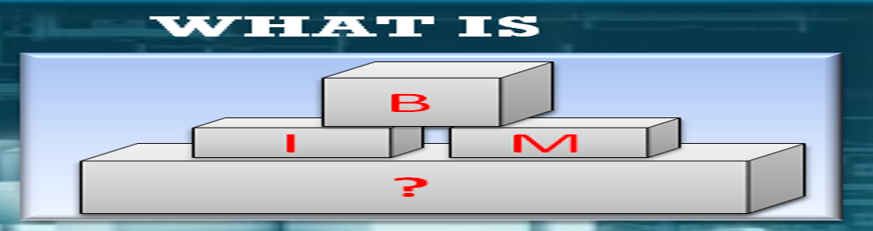
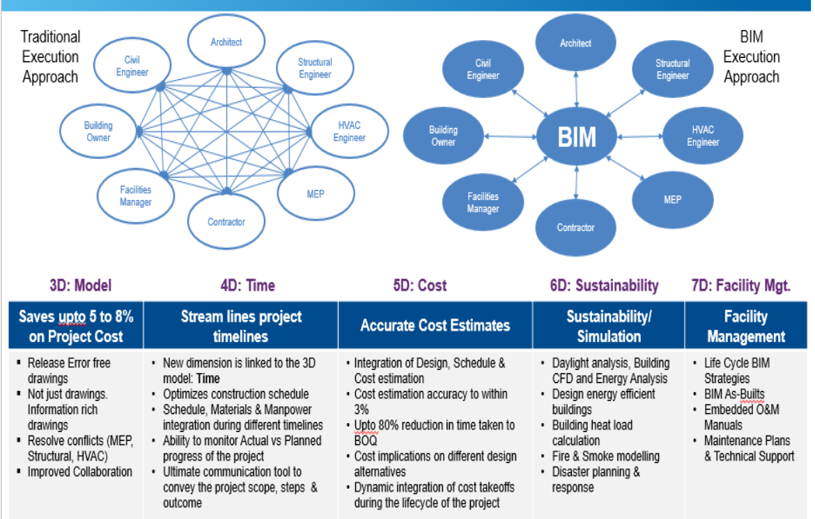
Building Information Modeling (BIM) is a digital representation of physical and functional characteristics of a facility. A BIM is a shared knowledge resource for information about a facility forming a reliable basis for decisions during its life-cycle; defined as existing from earliest conception to demolition.
Traditional building design was largely reliant upon two-dimensional drawings (plans, elevations, sections, etc.). Building information modeling extends this beyond 3-D, augmenting the three primary spatial dimensions (width, height and depth) with time as the fourth dimension and cost as the fifth. BIM therefore covers more than just geometry. It also covers spatial relationships, light analysis, geographic information, and quantities and properties of building components (for example manufacturer’s details).
BIM involves representing a design as combinations of “objects” – vague and undefined, generic or product-specific, solid shapes or void-space oriented (like the shape of a room), that carry their geometry, relations and attributes. BIM design tools allow extraction of different views from a building model for drawing production and other uses. These different views are automatically consistent, being based on a single definition of each object instance. BIM software also defines objects parametrically; that is, the objects are defined as parameters and relations to other objects, so that if a related object is amended, dependent ones will automatically also change. Each model element can carry attributes for selecting and ordering them automatically, providing cost estimates and well as material tracking and ordering. For the professionals involved in a project, BIM enables a virtual information model to be handed from the design team (architects, surveyors, civil, structural and building services engineers, etc.) to the main contractor and subcontractors and then on to the owner/operator; each professional adds discipline-specific data to the single shared model. This reduces information losses that traditionally occurred when a new team takes ‘ownership’ of the project, and provides more extensive information to owners of complex structures.
Our work experience helped us create a unique set of services for the market under the banner of Design Management Services (DMS). Architects, Engineers and Production staff in Creative BIM Services have worked on various international BIM and AEC projects and have a sound knowledge of global BIM standards and codes. Residential, Mixed Use, Airport, Educational, Healthcare, Institutional, Hospitality, Workplaces.
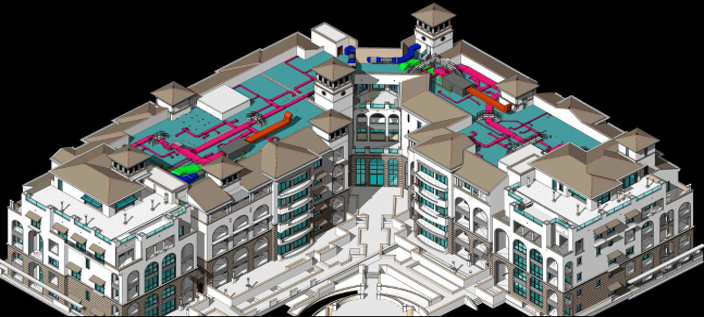
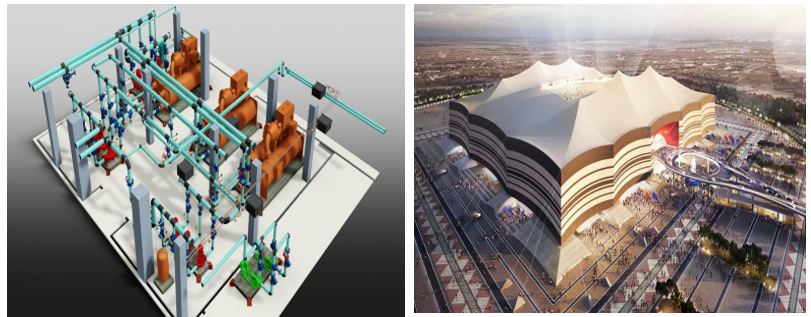
BENEFITS OF BIM
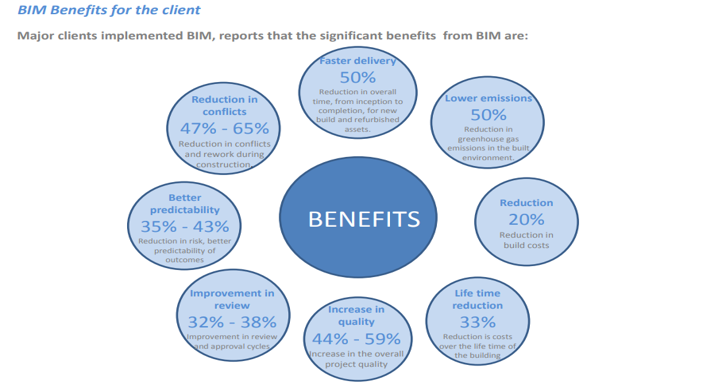
The Benefits of BIM implementation
BIM creates a better visual impact on designs compared to 2D drawings. Therefore CAD to BIM Conversion Services help in BIM Building Design Services better. Ability to make changes instantly during construction with the help of virtual construction simulations.
BIM Modeling services help to define the construction process from conceptual design to energy analysis and facility management.
With the help of a collaborative approach we can resolve detect clashes and design issues which can help reduce redundant construction up to 70 to 80%. This also helps to reduce the construction time and cost.
.
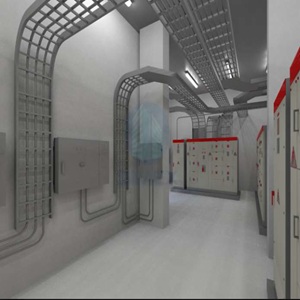
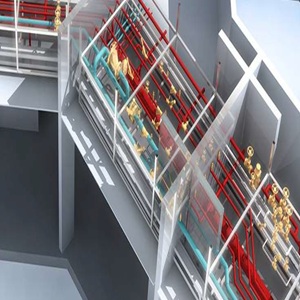
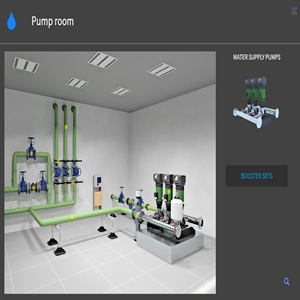
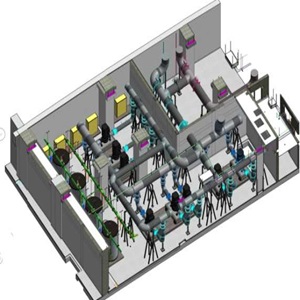
Mechanical, Electrical & Plumbing (MEP) Engineering
Early Conceptual Design
Modeling: Save time creating and analyzing multiple design iterations with tools to quickly create conceptual massing models.
Visualization: Quickly and easily transform designs into 3D immersive presentations.
.
Detailed design & modeling
Design: Create building systems with greater accuracy and efficiency using intelligent 3D models to support each step of the project.
.
Collaboration
Design coordination: Improve model coordination and indifference checking between architects and engineers.
Clash detection: Quickly and easily perform clash detections during design, and resolve clashes before construction.
.
Visualization
In-process design rendering: Use model data to create realistic renderings.
Visualization: Visualize and communicate design ideas from within your design software.
.
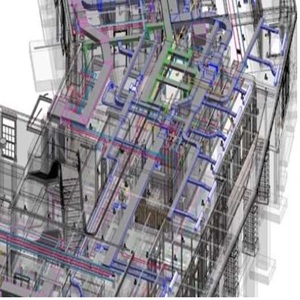
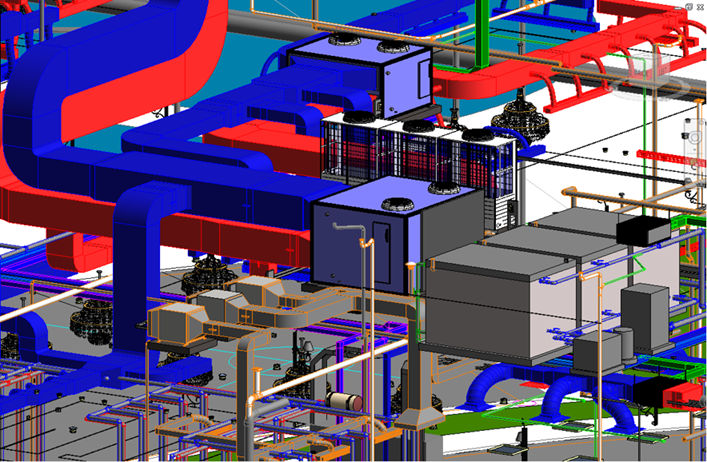
HVAC-DUCTWORK
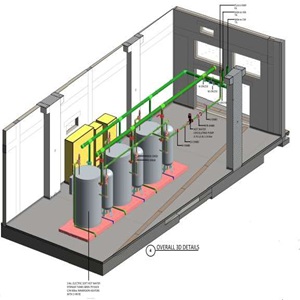
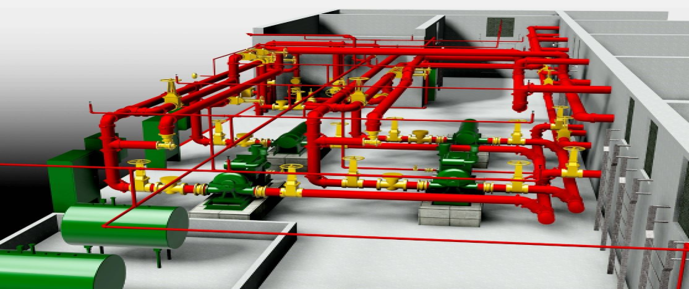
FIREFIGHTING SERVICES
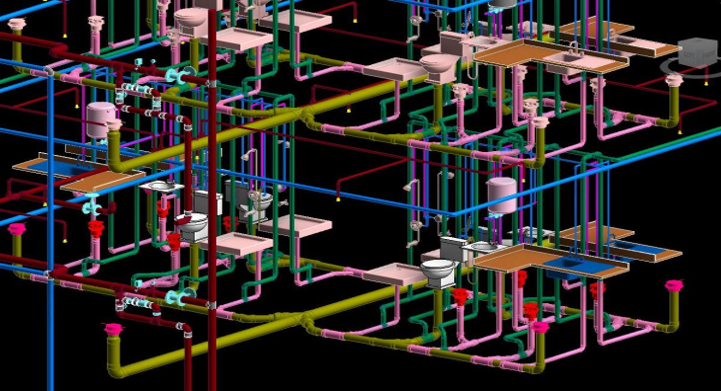
PLUMBING (DRAINAGE & WATER SUPPLY)